Turn the PDF catalog into a quote request that arrives complete.
We build websites for manufacturers and distributors: product pages with real specifications, a quote form that asks what quoting needs and a private area for dealers.
- 10
- Products built in-house
- 12
- Web projects in the portfolio
- 04
- Site languages: EN, TR, ES, DE
- UTC+3
- Overlaps US mornings and the full EU workday
A buyer looking for a part opens four supplier sites and keeps the ones that let them judge a fit quickly. The supplier with a catalog in PDF form, a contact form with three fields and a phone number loses the quote to the one whose page shows the tolerance, the material and a form that takes the drawing. We build the second kind.
Why industrial sites lose quote requests
The specification sits inside a PDF that search engines and AI assistants read badly. The form asks for a name and a message, so the first reply is a list of questions. The part families are not on separate pages, so a search for a specific item lands on the home page. Each of these costs a day of back and forth per request, and some buyers never come back.
The quote form that works
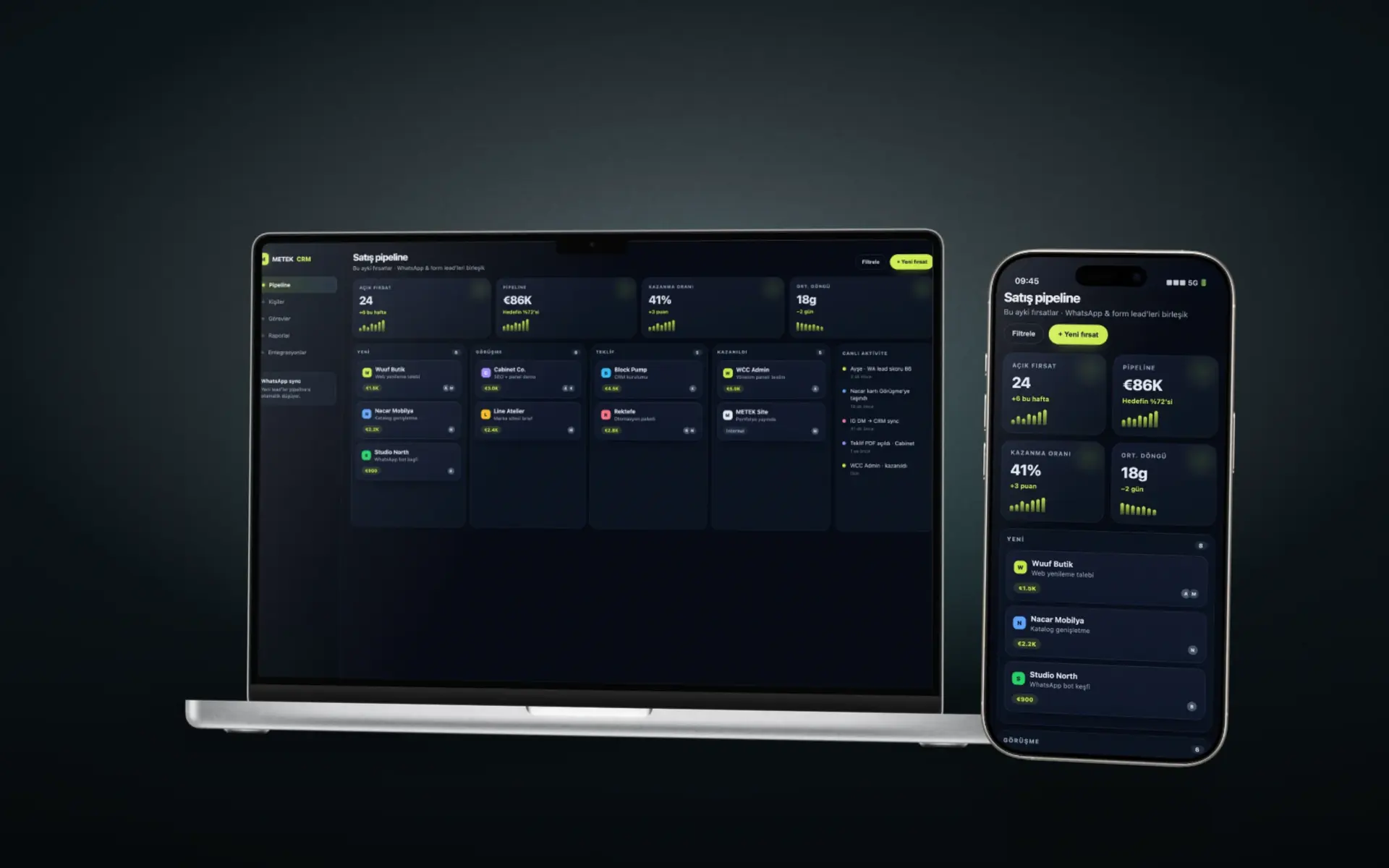
Ask for what a quote needs: part or family, quantity, material, standard, a drawing upload and a required date. The request lands in a panel with a status, an owner and a reply deadline, and the buyer receives a reference number. Staff stop retyping and stop chasing missing information.
A public catalog and a private dealer area
Product pages stay open, with dimensions, materials, standards and downloads. Behind a login, a dealer sees their own price list, order history and files, all drawn from the same product data, so a change is made once. Prices come from your system. We do not invent a pricing model.
Search and AI visibility for part searches
One page per product family, specifications in HTML tables, clear titles that name the part, structured data that matches the page and internal links between related parts. Buyers and assistants both search for specifics, so specifics are what the page should offer.
Export controls: settle this before you send drawings
If your products or technical data fall under ITAR or the Export Administration Regulations, sharing technical data with a team outside the United States can count as an export. Tell us before any drawing moves. Your compliance officer decides what may be shared, and we then design the project so that we never receive controlled data: public pages, catalog structure and portals can be built without it.
Connecting to the ERP
We do not propose replacing your ERP. The portal reads from an export your team already produces, shows dealers their own prices and order status and writes new requests back as a file or an API call. Much of the early work is finding out what your ERP can export.
Why teams work with us
Built around quoting, not decoration.
Quote requests as the product
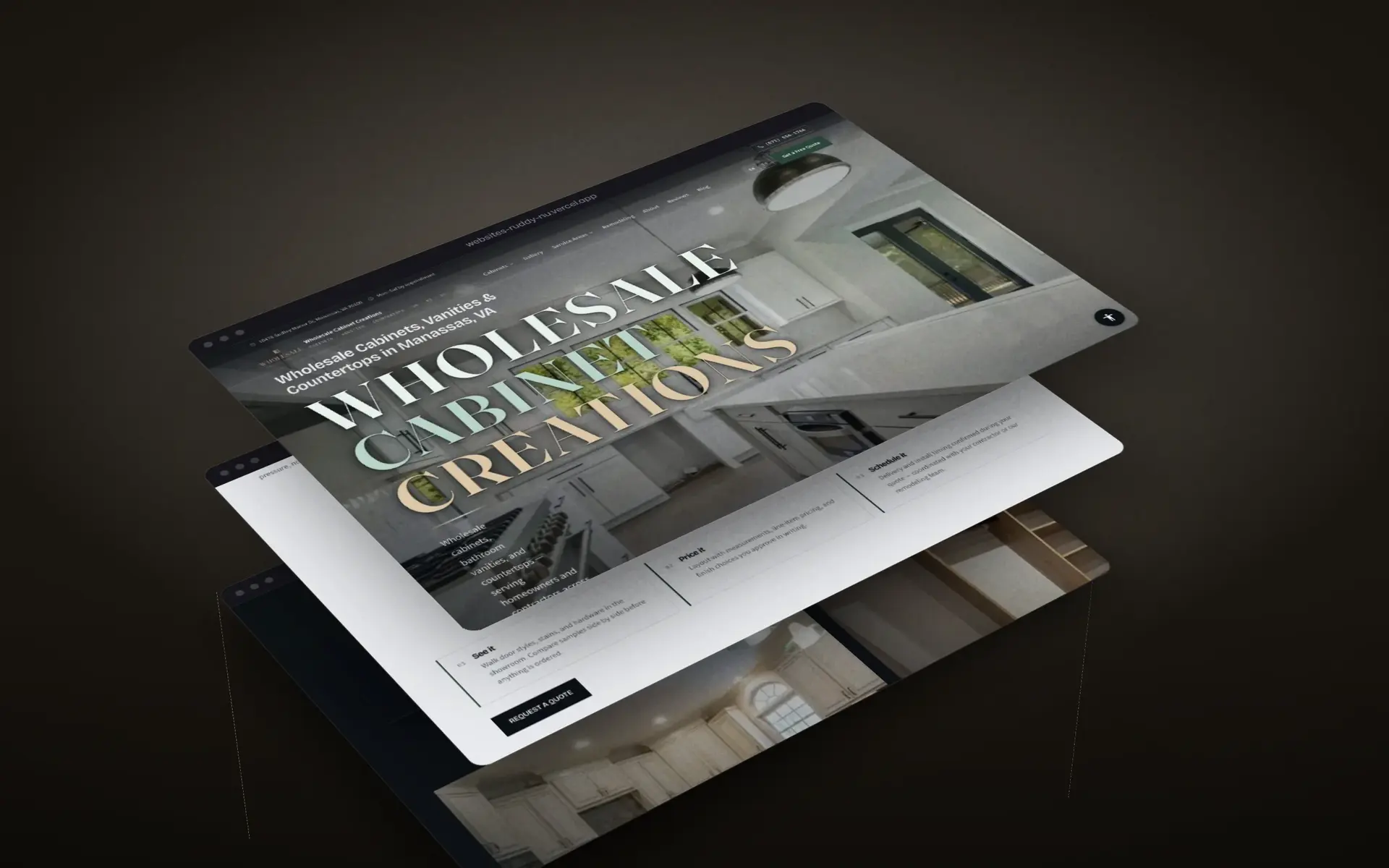
Wholesale Cabinet Creations, in our portfolio, is built around product collections, finished installations and direct quote requests from US trade buyers.
Catalog and dealer area
Open product pages for everyone, a login for dealers with their own prices, from one data source.
Specifications as text
Tables a buyer, a search engine and an assistant can read, with the PDF kept as a download.

Scope
What a manufacturer's site includes
Product data model
Families, specifications and files, kept in one place.
Catalog pages
One page per family with specification tables.
Quote request flow
Complete forms, drawing upload, status and reference numbers.
Dealer area
Logins, price lists, order history and downloads.
ERP and CRM links
Exports and APIs your systems already offer.
Handoff
Your repository, accounts and admin panel for your team.
Choosing a channel
PDF catalog, marketplace listing or your own catalog site
| Channel | Good for | Where it strains | Notes |
|---|---|---|---|
| PDF catalog by email | Existing customers who know what they want | New buyers, search and AI visibility | Keep it as a download, not as the catalog. |
| Marketplace or directory listing | Being found by buyers who start there | Your brand, margins and the quote conversation | A useful channel beside your own site. |
| Your own catalog and quote site | Owning the buyer relationship and the data | Needs product data and an owner on your side | Where our work usually starts. |
How a project runs
From first conversation to launch
Discovery
We document the business goal, audience, available material, and technical constraints.
Scope
Pages, features, priorities, responsibilities, and review criteria are written down.
Design
We establish the interface, component rules, and a CSS design system when the project needs one.
Development
We implement the approved interface and connect the required panels, CRM functions, or messaging tools.
Quality review
We review mobile behavior, performance, core accessibility requirements, and technical SEO.
Launch
The approved release goes live with the agreed support period and content handoff.
Technology used in this work
- React
- Vite
- TypeScript
- Next.js
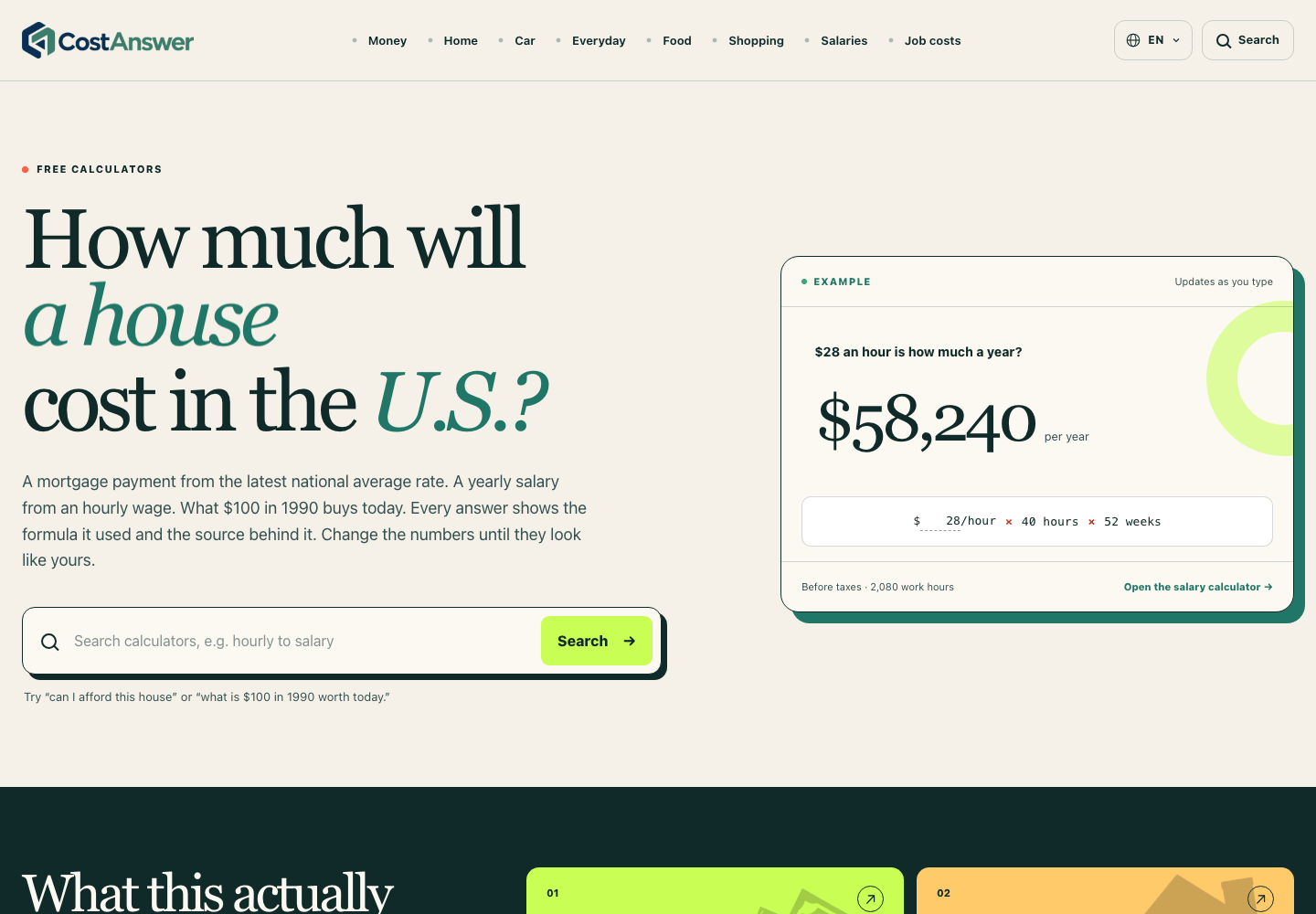
- Structured US public datasets
- Versioned data snapshots
- Tested calculation engines
- Supabase
- PostgreSQL
Questions we are asked
Can we keep PDF datasheets next to the HTML pages?
Yes. The PDF stays as a download, and the same specifications appear as text and tables on the page, which is what search engines and assistants read.
How do you move hundreds of SKUs from spreadsheets or PDFs?
We map the columns to a product data model, clean what is inconsistent, import a sample for your team to check and then load the rest.
Can you build quoting or estimating logic?
Yes, when the rules can be written down. We implement them as calculations and validations your team can read and change.
Do you support several languages for export sales?
Yes. We write English, German, Spanish and Turkish natively and bring in a native writer for other languages. Each version has its own address and hreflang tags.
What about ITAR or export-controlled data?
Tell us before sharing anything. Your compliance officer decides what may leave the US, and we scope the work so we never receive controlled technical data.
Send us your catalog and the last three quote requests.
We will show where the information gets lost between the first enquiry and the quote, and what a first version of the site would fix.