Software built around your operation.
METEK Technologies builds web applications, admin panels, customer portals and internal tools for companies that have outgrown spreadsheets and off-the-shelf software.
- 10
- Products built in-house
- 12
- Web projects in the portfolio
- 04
- Site languages: EN, TR, ES, DE
- UTC+3
- Overlaps US mornings and the full EU workday
Off-the-shelf software is the right call until your process stops fitting its fields. Then the team exports to spreadsheets, keeps notes in chat and retypes the same data in three places. That is where custom software starts paying for itself. We build it around your records and the actions your team takes every day.
Build or buy: three questions
Does a mature product already cover most of the job? Buy it. Do your rules differ from how that product thinks, for example quoting logic, scheduling limits, approval chains or product configurations? Then custom software starts to make sense. Will the data have to flow between systems that were never designed to talk? That usually decides it.
We say which side of the line you are on. Sometimes the answer is a small integration between two tools you already pay for.
What we build
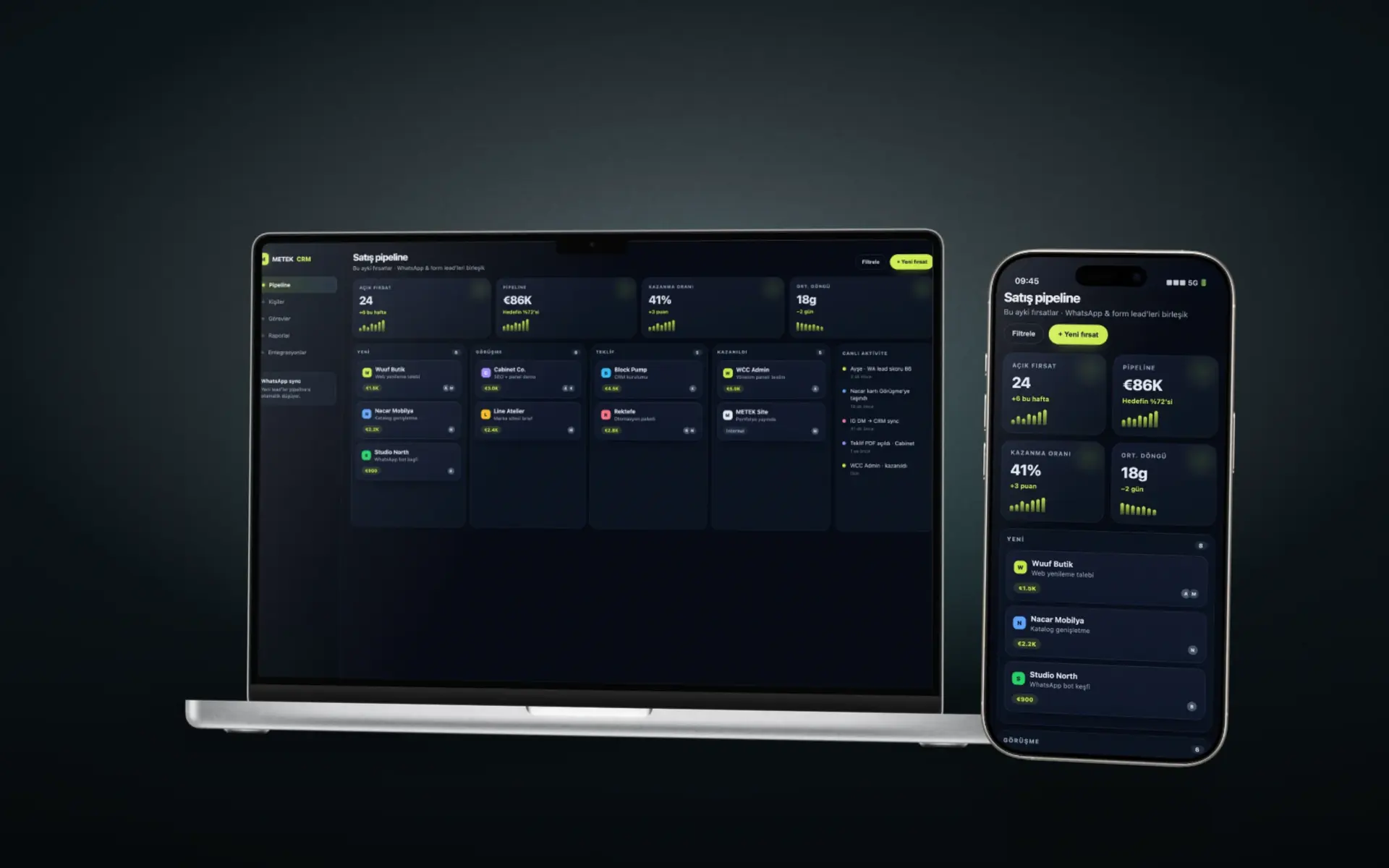
Admin panels and back offices for content, orders, bookings and inventory. CRM interfaces built around your sales process. Customer and partner portals. Dashboards that combine data from several systems. Web applications behind a public website that turn its enquiries into records.
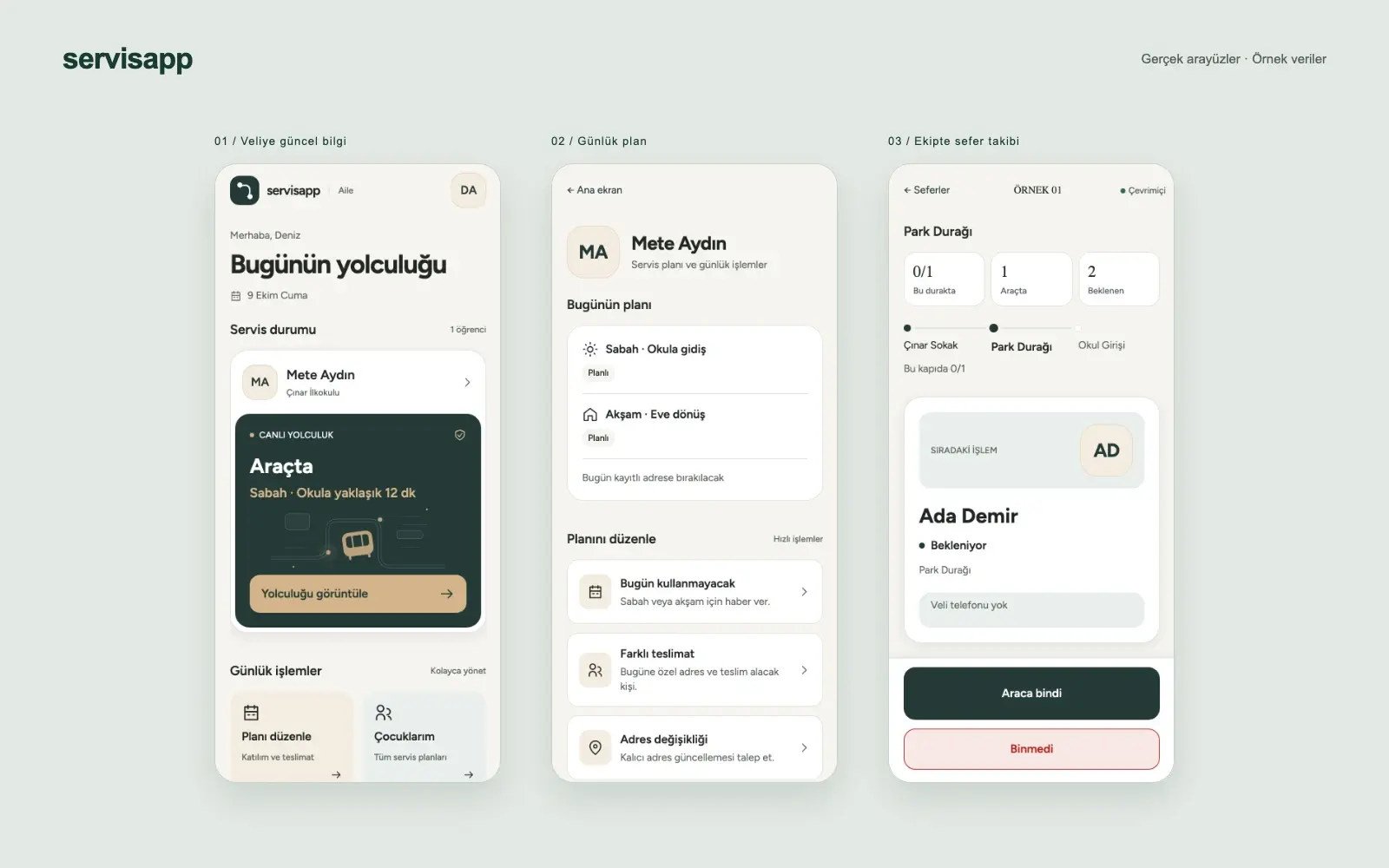
When the workflow needs a phone, we build the mobile app on the same data and component system, so the office and the field see the same record.
How a project runs
Discovery documents the users, records, actions and integrations. Scope turns that into a written plan with milestones. Design produces the screens and the component rules. Development arrives in reviewable increments on a staging site you can open any time.
Before launch we test the critical paths from start to finish, review performance and access rules and migrate existing data. After launch, support and new features are scoped separately so cost and ownership stay clear.
What moves cost and timeline
The number of user roles. The number of records and how they relate. Each integration, since every external system has its own habits and failures. The amount of existing data to migrate and clean. How many decisions need your side's review, and how quickly they arrive.
We estimate after discovery, by milestone, and show the assumptions behind each line. A one-line request cannot produce a trustworthy number, and we do not pretend it can.
Ownership, handoff and what if we disappear
You own the code and the infrastructure accounts, created under your organization. We document the architecture, the deployment and the reasons behind the main decisions, so your team or another vendor can continue. Integrations use official APIs where they exist, with credentials stored in your environment.
Why teams work with us
One accountable lead from scope to launch.
Written scope first
Features, priorities, responsibilities and acceptance criteria are written down before development starts, so both sides know what done means.
We run products ourselves
CostAnswer, ServisApp and Ahi AI are built and operated by METEK Technologies. Client software gets the same engineering habits.
A maintainable stack
TypeScript, React and Next.js are our default for web work, chosen so another team can read and extend the code after handoff.
Overlap with your morning
Calls fit US Eastern mornings. Progress continues overnight, so a review is often waiting when your day begins.


Scope
What a software engagement includes
Discovery and written scope
Users, records, actions, integrations and acceptance criteria.
Interface and UX design
Screens and a component system the whole app follows.
Web or mobile application
Built in reviewable increments on a staging site.
Integrations
APIs, payments, messaging, calendars and existing databases.
Testing and launch
Critical paths tested from start to finish, data migrated, release planned.
Code ownership and documentation
Your repositories, your accounts, documented architecture.
Choosing a route
Spreadsheet, off-the-shelf software, no-code or custom
| Route | Good for | Where it strains | Our view |
|---|---|---|---|
| Spreadsheets and email | A very small team and a process that changes weekly | Several people editing, any audit need, any customer-facing view | Fine at the start. The cracks appear at the second hire. |
| Off-the-shelf SaaS | A common process that a mature product already covers | Your rules differ, or data must cross several tools by hand | Try it first. It is usually the fastest and cheapest. |
| No-code platform | Internal tools with simple logic and few users | Complex permissions, scale and long-term portability | Good for prototypes. Check the exit before you commit. |
| Custom software | Rules specific to your business and data that crosses systems | Needs ownership on your side and a written scope | Right when the three questions above point here. |
How a project runs
From first conversation to launch
Discovery
We document the business goal, audience, available material, and technical constraints.
Scope
Pages, features, priorities, responsibilities, and review criteria are written down.
Design
We establish the interface, component rules, and a CSS design system when the project needs one.
Development
We implement the approved interface and connect the required panels, CRM functions, or messaging tools.
Quality review
We review mobile behavior, performance, core accessibility requirements, and technical SEO.
Launch
The approved release goes live with the agreed support period and content handoff.
Technology used in this work
- Next.js
- TypeScript
- Supabase
- PostgreSQL
- React
- Vite
Questions we are asked
How much does custom software cost?
It depends on user roles, records, integrations, existing data and review speed. We give a written estimate after discovery, broken down by milestone, instead of a figure guessed from a single line.
How long does a typical project take?
A focused internal tool can launch in weeks. A multi-role platform with integrations takes months. The written scope carries a milestone plan you can hold us to.
Who owns the code?
You do. Repositories and infrastructure accounts are created under your organization from the start.
Can you work with our in-house developers?
Yes. We can own a module, set up an architecture for your team to extend, or review and unblock an existing codebase.
Will you sign our NDA and contract?
Send them with the first brief. Your counsel stays in charge of the terms, and we work in your repository and your cloud account when you have them.
What happens if we stop working with you?
Nothing breaks. The code, the accounts and the documentation are already yours, so another team can pick up where we left off.
Tell us what the team does every day.
List the records, the daily actions and the tools already in use. That list is the start of a workable scope.