iOS and Android apps, with everything behind them.
We design and build mobile apps for US companies, together with the backend, the admin panel and the release process that keep them running.
- 10
- Products built in-house
- 12
- Web projects in the portfolio
- 04
- Site languages: EN, TR, ES, DE
- UTC+3
- Overlaps US mornings and the full EU workday
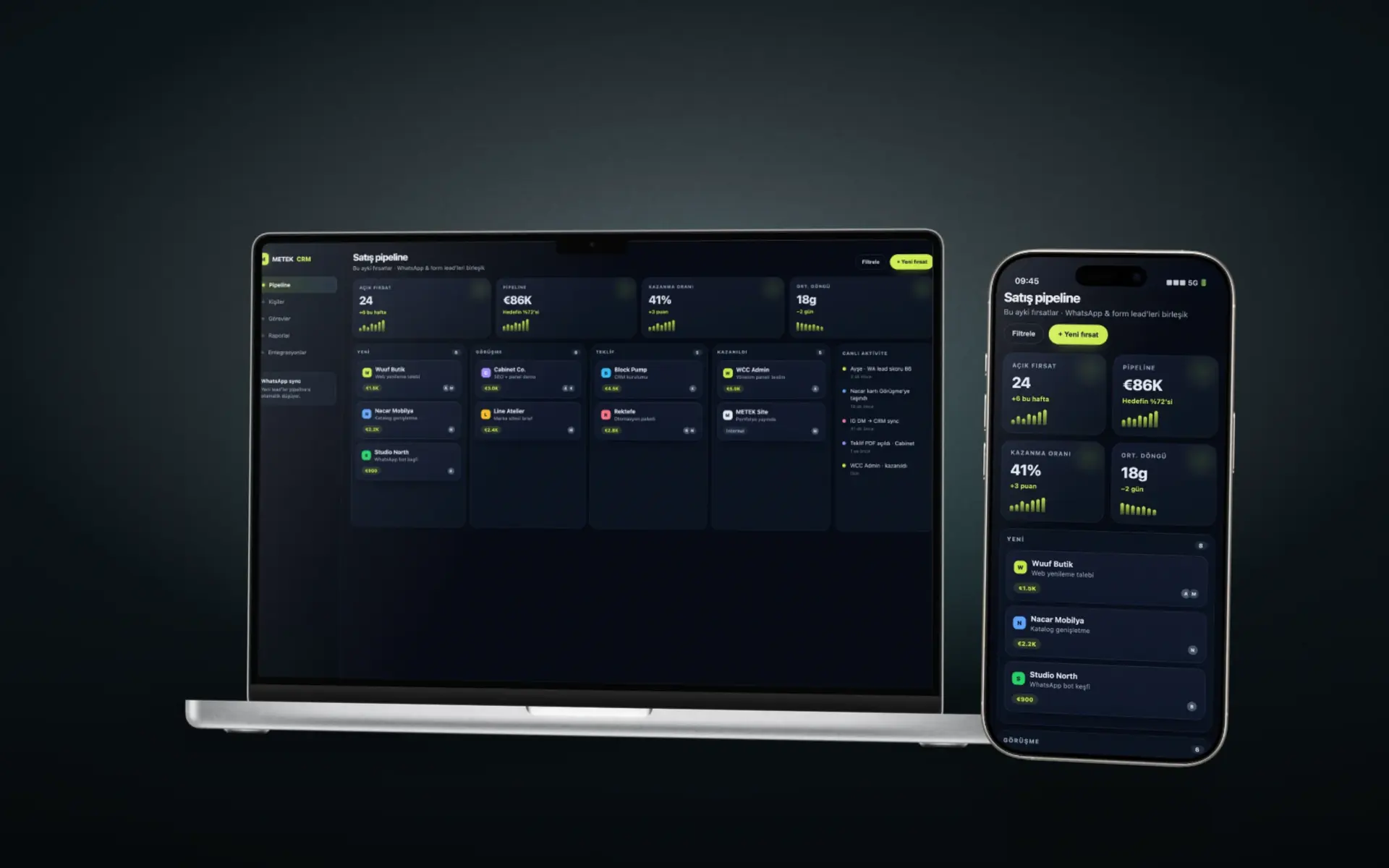
A mobile app is the visible tenth of a larger system. Behind it sit an API, accounts, push notifications, an admin tool for your team and a release process the app stores will accept. We build the whole set, so the app on the phone and the tool on the desk show the same record.
Native, cross-platform or a web app
A cross-platform app, built once in a framework such as React Native, suits most business apps and keeps cost and maintenance down. Native iOS and Android make sense when the product leans on platform-specific features, heavy graphics or demanding performance. A web app that installs from the browser can be enough when users work from a desk and need reach more than polish.
We make that choice with you at the start and write down the reasoning, so it can be revisited without a dispute.
What lives in the app and what lives in the API
Rules that must not diverge, such as pricing, permissions and validation, belong in the API so iOS, Android and the web all follow them. The app handles presentation, device features and offline behavior. Getting this split right early is what lets the same product grow to three screens without three sets of bugs.
Offline, sync and notifications
Field workers and travelers lose signal, so we decide per feature whether it must work offline and how conflicting edits resolve when the connection returns. Push notifications go through a rule set that respects quiet hours and lets users choose what they receive, since a noisy app gets muted or deleted.
From scope to the stores
We scope the first release, design the screens, build in increments on test builds you can install and prepare the store listings. Both stores review apps against published guidelines, including rules on payments for digital goods and on privacy disclosures. We read the current guidelines at scoping and plan for review time instead of treating it as a surprise.
After release
Operating systems update every year and can break things that worked. We agree an update and monitoring plan, with crash reports and usage data feeding the next release, and we hand over the build pipeline and accounts under your organization so you are never dependent on us to publish.
Why teams work with us
The app and the system behind it, together.
Apps we operate ourselves
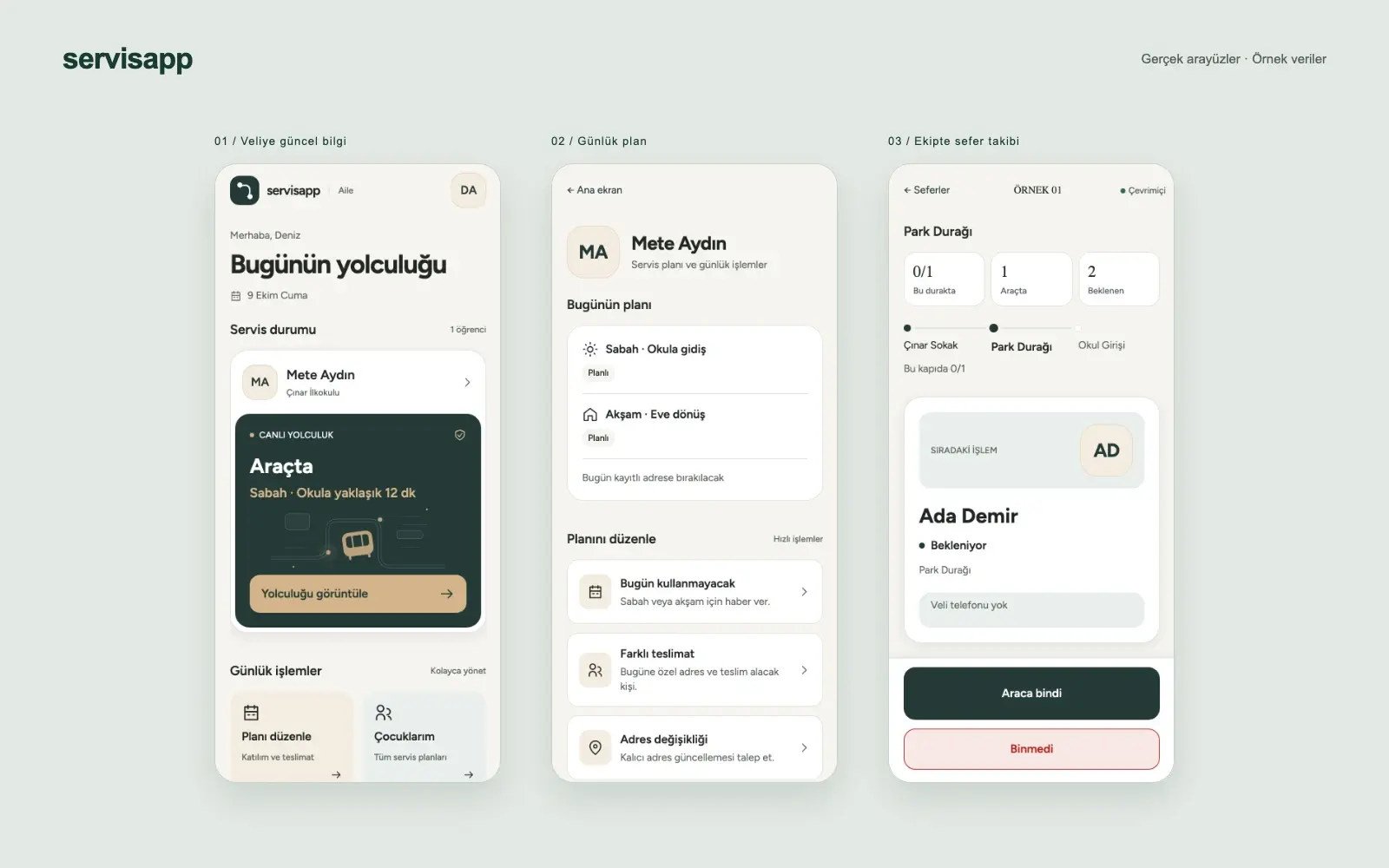
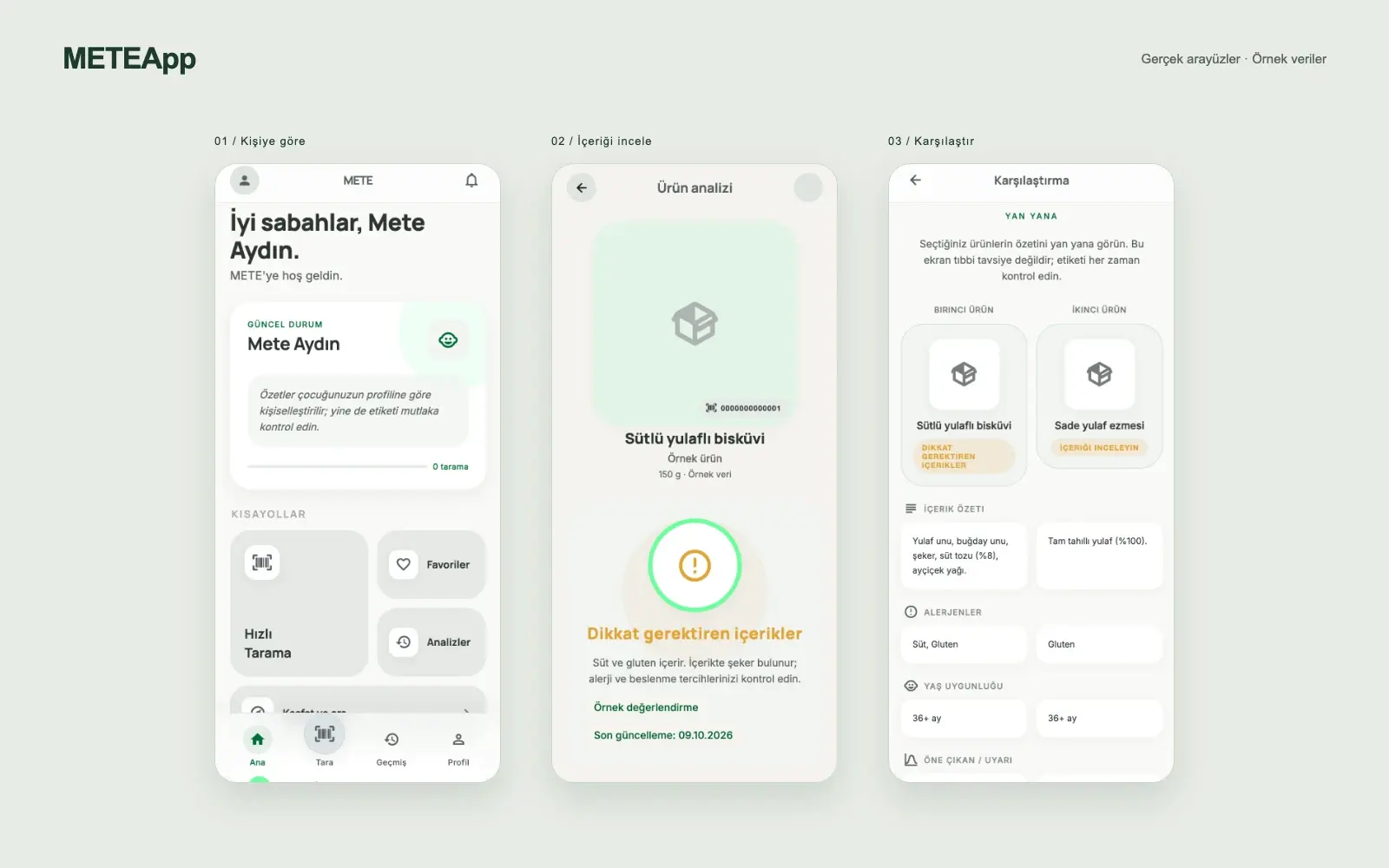
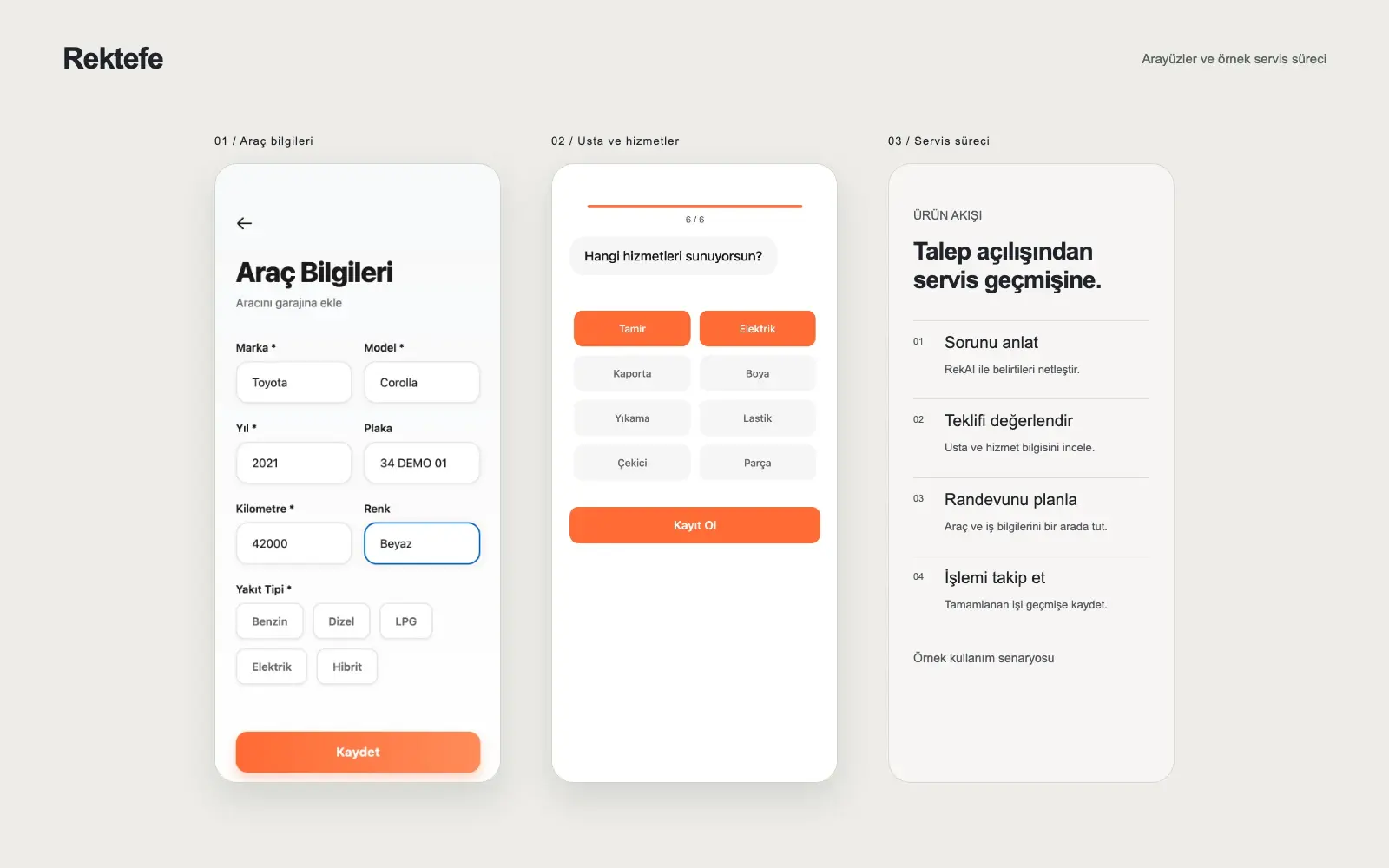
METEApp reads product labels, Rektefe tracks vehicle repairs and ServisApp connects parents, drivers and school transport teams. They are in our own catalogue.
Backend and admin included
The API, the web administration and the notification system are part of the plan, not a separate vendor's problem.
Honest platform advice
We recommend native, cross-platform or a web app based on what your product needs, and we say when a mobile app is not the right first step.
Scope
What a mobile project includes
Scope and platform decision
The first release, the platforms and the reasoning.
UX and interface design
Screens and a component system for both platforms.
App build
iOS and Android, built in increments on test builds.
Backend and admin
API, accounts, notifications and a web panel for your team.
Store release
Listings, privacy disclosures, review and launch.
Handoff
Source, build pipeline and store accounts under your organization.
Choosing a platform
Cross-platform, native or web app
| Option | Good for | Watch for | Notes |
|---|---|---|---|
| Cross-platform (for example React Native) | Most business apps on both platforms with one team | Rare native features and the most demanding animation | Our default for business apps. |
| Native iOS and Android | Heavy graphics, deep platform features, top performance | Two codebases and a larger budget | Choose it when the product needs it. |
| Installable web app (PWA) | Users at a desk, reach over polish, fast iteration | Limited access to some device features on iOS | A fine first step for many products. |
How a project runs
From first conversation to launch
Discovery
We document the business goal, audience, available material, and technical constraints.
Scope
Pages, features, priorities, responsibilities, and review criteria are written down.
Design
We establish the interface, component rules, and a CSS design system when the project needs one.
Development
We implement the approved interface and connect the required panels, CRM functions, or messaging tools.
Quality review
We review mobile behavior, performance, core accessibility requirements, and technical SEO.
Launch
The approved release goes live with the agreed support period and content handoff.
Technology used in this work
- Expo / React Native
- TypeScript
- Node.js / Express
- PostgreSQL / Prisma
- React Native
- Expo
- MongoDB
- Next.js
- Supabase
- PostgreSQL
Questions we are asked
Native or cross-platform?
Cross-platform for most business apps, native when the product depends on platform-specific features or top performance. We explain the choice for your case in the scope.
Do you also build the backend?
Yes. The API, the database, the notification system and the admin panel are part of the work.
Can you take over an existing app?
Yes. We review the code first, tell you what is sound and what is not, and agree what to keep before we change anything.
Who publishes the app to the stores?
Your organization holds the developer accounts, and we prepare and submit the release with you. You are never dependent on us to publish.
Describe the app and who will hold it.
Tell us who the users are, what they do on their phone and what already exists behind the scenes. We will propose a platform and a first release.