AI agents that finish real work.
We design and build AI agents for US companies: agents that read incoming requests, find the right records and complete routine steps inside the tools your team already uses.
- 10
- Products built in-house
- 12
- Web projects in the portfolio
- 04
- Site languages: EN, TR, ES, DE
- UTC+3
- Overlaps US mornings and the full EU workday
Picture a support inbox that receives two hundred messages a day. Some are order-status questions, some are password resets, a few need a refund decision and the rest need a person. An agent can clear the first two groups in minutes, prepare the third for approval and leave the rest alone. Getting there takes less machine learning than plumbing: access to the right systems, rules about what the agent may do and a way to check its work. That plumbing is most of what we build.
Which jobs suit an agent
An agent is useful when a task follows a pattern a person could write down: read the request, check a record, choose among a small set of actions, update a system, reply. Support triage, appointment booking, lead qualification, order status and internal knowledge lookups fit that shape.
It fits badly when the job is mostly negotiation, when judgment rests on unwritten policy or when a wrong decision creates legal exposure. We say so during discovery. A narrow agent that closes one workflow is worth more than a general assistant nobody trusts with anything.
What sits inside the loop
A request arrives. The agent retrieves the records it is allowed to see, decides which of a fixed list of tools to call, performs the step or asks a person, and writes the outcome to a log. The model chooses among options you defined. It cannot invent a new capability.
Actions with side effects, such as a refund, an email to a customer or a change to a contract record, start behind an approval gate. When the log shows months of correct approvals, you can decide to let that one action run alone, within a cap on amount and volume.
When the agent reads text you do not control
An agent that reads inbound email or web pages can be fed instructions disguised as content. We treat all such text as data, give the agent only the tools the job needs, keep reading and acting in separate steps and put a person in front of anything irreversible. We also test with hostile examples before launch, because anyone who can send the agent text can try it.
Checking the work before customers see it
We assemble an evaluation set from real past cases, each with the answer your team would accept, and run the agent against it. The first runs show where it fails. The agent then works in review mode, where it drafts and a person sends, before it works alone on anything.
Acceptance thresholds are written into the scope, and the same set reruns whenever the model or the prompt changes, so a provider update cannot degrade quality unnoticed.
Data, vendors and the rules that apply
The agent sees only the data its job needs, credentials stay out of prompts and every call is logged. We choose the model for the task, the cost and your data rules, and we build so it can be swapped later. For the provider you select, we read the current data-use and retention terms and settle the options in writing before build.
Some rules attach to the use case rather than the technology. New York City regulates automated tools that screen job candidates. Several states expect a bot to disclose that it is a bot in commercial conversations. Customers in the EU bring transparency duties under the AI Act. Your counsel decides what applies, and we build the controls that decision calls for.
After launch
Agents age as your business changes: new products, new policies, new edge cases. The log shows where the agent hesitated or a person overrode it, and that list becomes the next round of work. Some teams keep us for monthly tuning. Others take the handoff and run it with our documentation.
Why teams work with us
Agents built as software, with limits and logs.
We run agents ourselves
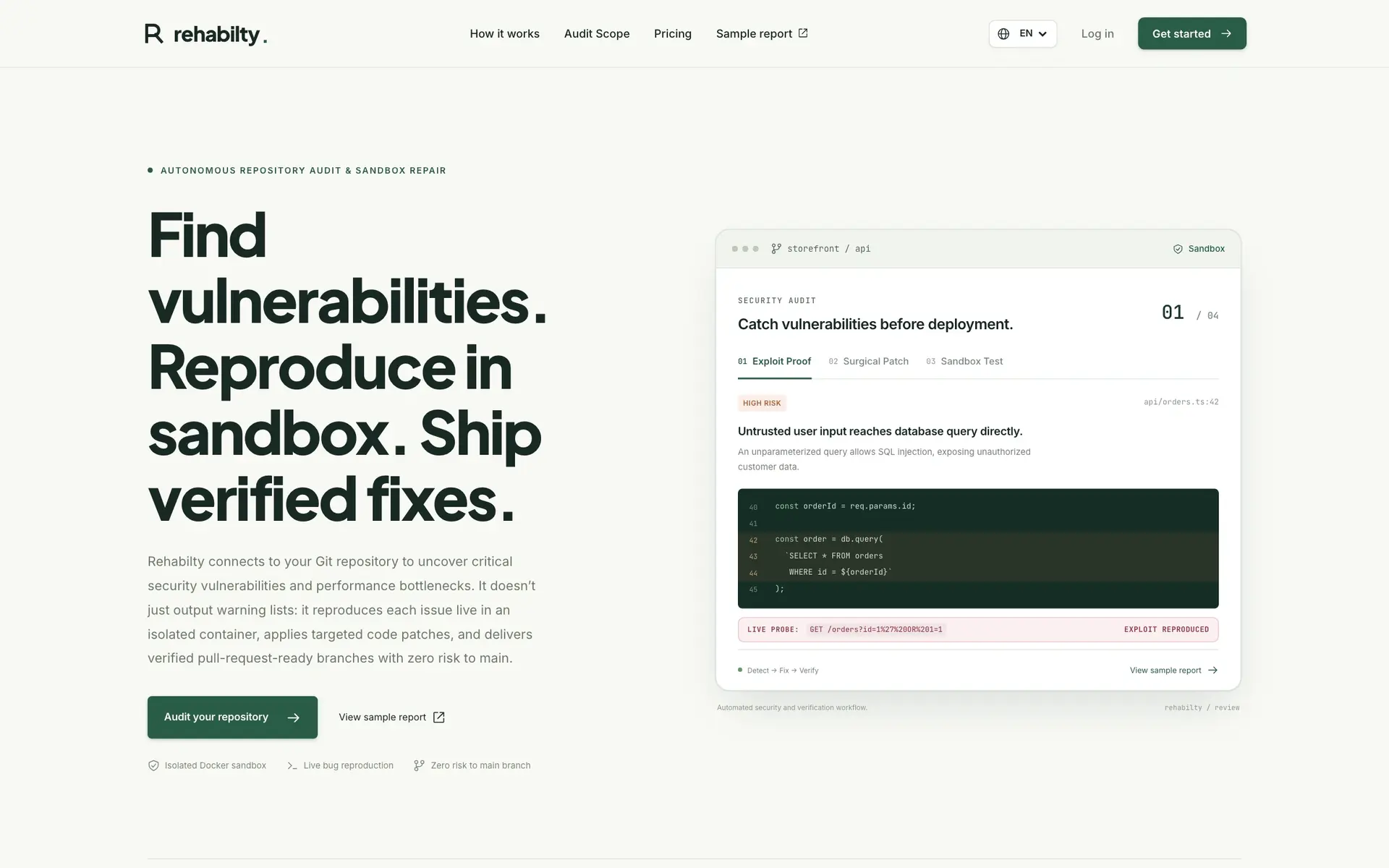
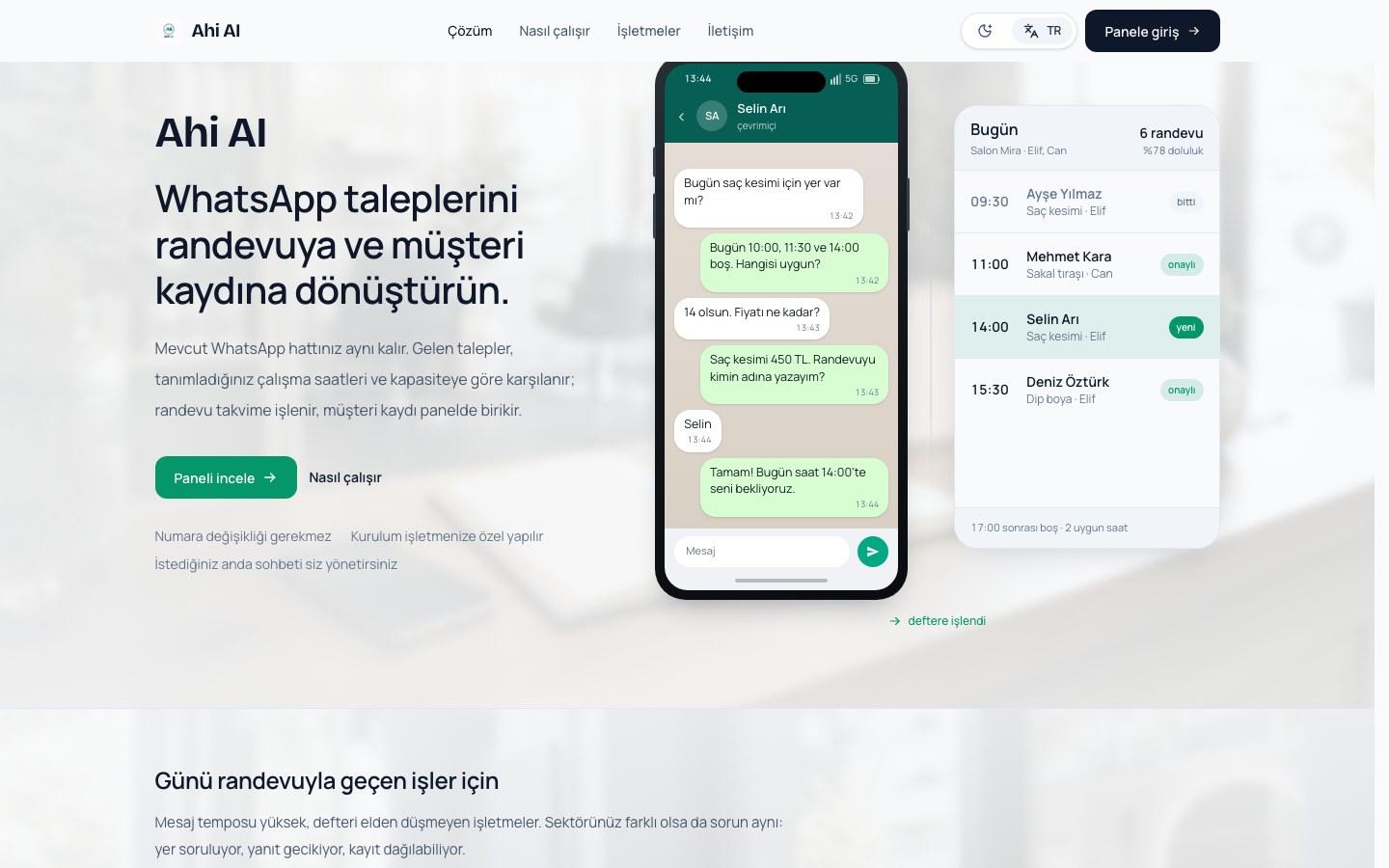
Rehabilty audits a code repository and verifies each repair in a sandbox before proposing it. Ahi AI books appointments over WhatsApp. We build agents for clients the way we build them for our own products.
Limits written first
Before any prompt is tuned, we write down the tools the agent may call, the actions that need a person's approval and the volume it may handle alone.
Every action is logged
Each step is recorded with its inputs, so your team can audit a decision instead of guessing why it happened.
Mornings that overlap
We work from Türkiye, which leaves a call window in US Eastern mornings. Work continues while your team is offline.
Scope
What an agent engagement includes
Workflow map
Each step, system and approval point written down before build.
Tool and API integrations
Read and write access to the systems the job actually touches.
Guardrails and approvals
Rules for what the agent may do alone and what waits for a person.
Evaluation set
Real past cases with accepted answers, rerun on every change.
Activity log and review panel
Every action recorded with its inputs and outcome.
Documentation and handoff
How it works, how to change it and how to switch it off.
Choosing an approach
Chatbot, automation tool, agent or plain software
| Approach | Fits when | Breaks when | What we usually advise |
|---|---|---|---|
| Scripted chatbot | Questions repeat word for word and the answers rarely change | Wording varies, or the answer depends on the customer's record | Fine for a short FAQ. Not worth much more investment. |
| No-code automation tool | The steps are fixed and every input has the same shape | Input is free text, or the next step depends on judgment | Start here. Add an agent only for the step that needs reading. |
| AI agent with tools | Input is free text and the response comes from your own records | Rules are unwritten, errors are costly and nobody reviews the output | Build it with approval gates and an evaluation set. |
| Plain custom software | The rule is a rule and a form can capture the input | Requests arrive as email, PDFs or chat | Often the cheapest answer. We say so when it is. |
How a project runs
From first conversation to launch
Discovery
We document the business goal, audience, available material, and technical constraints.
Scope
Pages, features, priorities, responsibilities, and review criteria are written down.
Design
We establish the interface, component rules, and a CSS design system when the project needs one.
Development
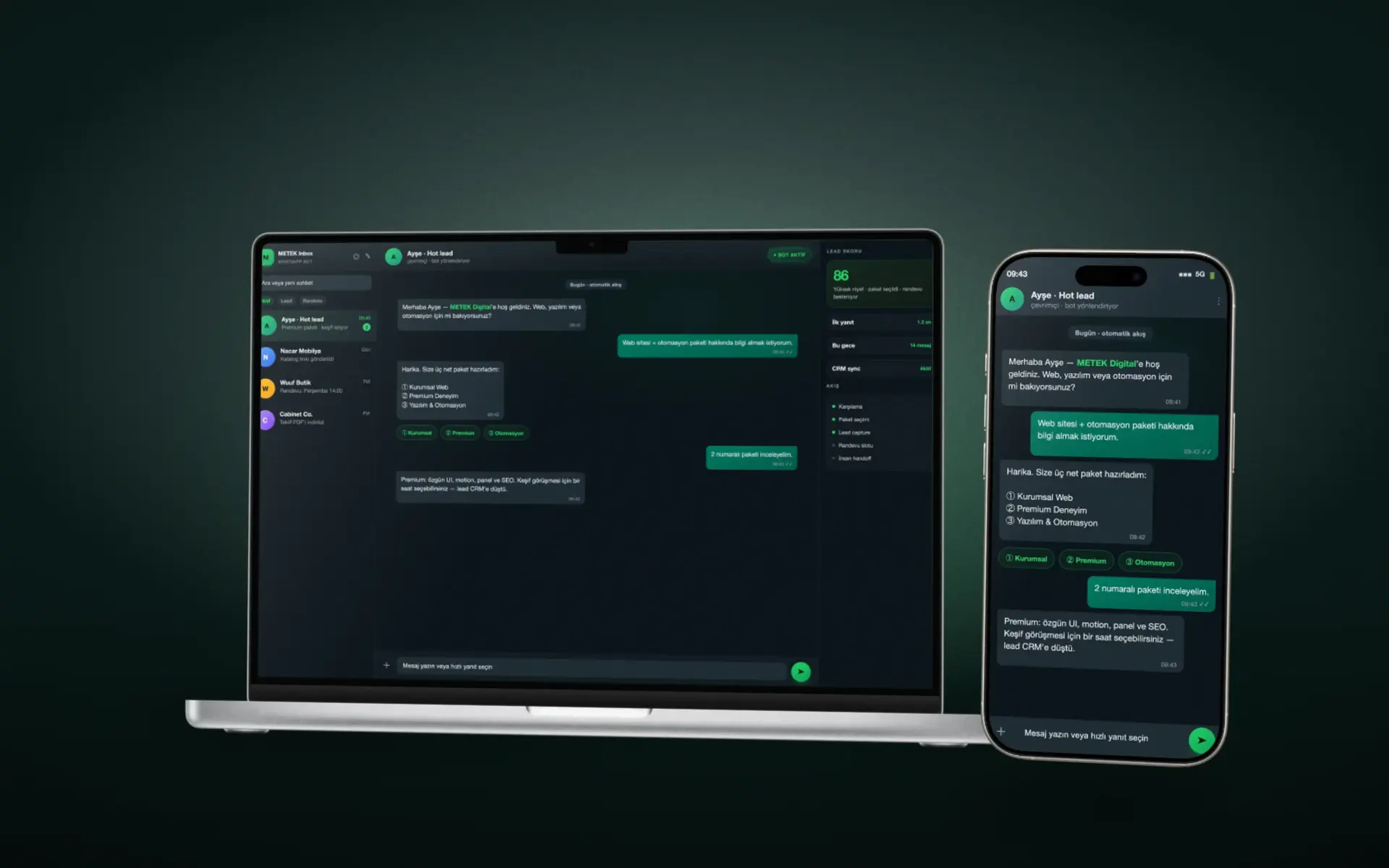
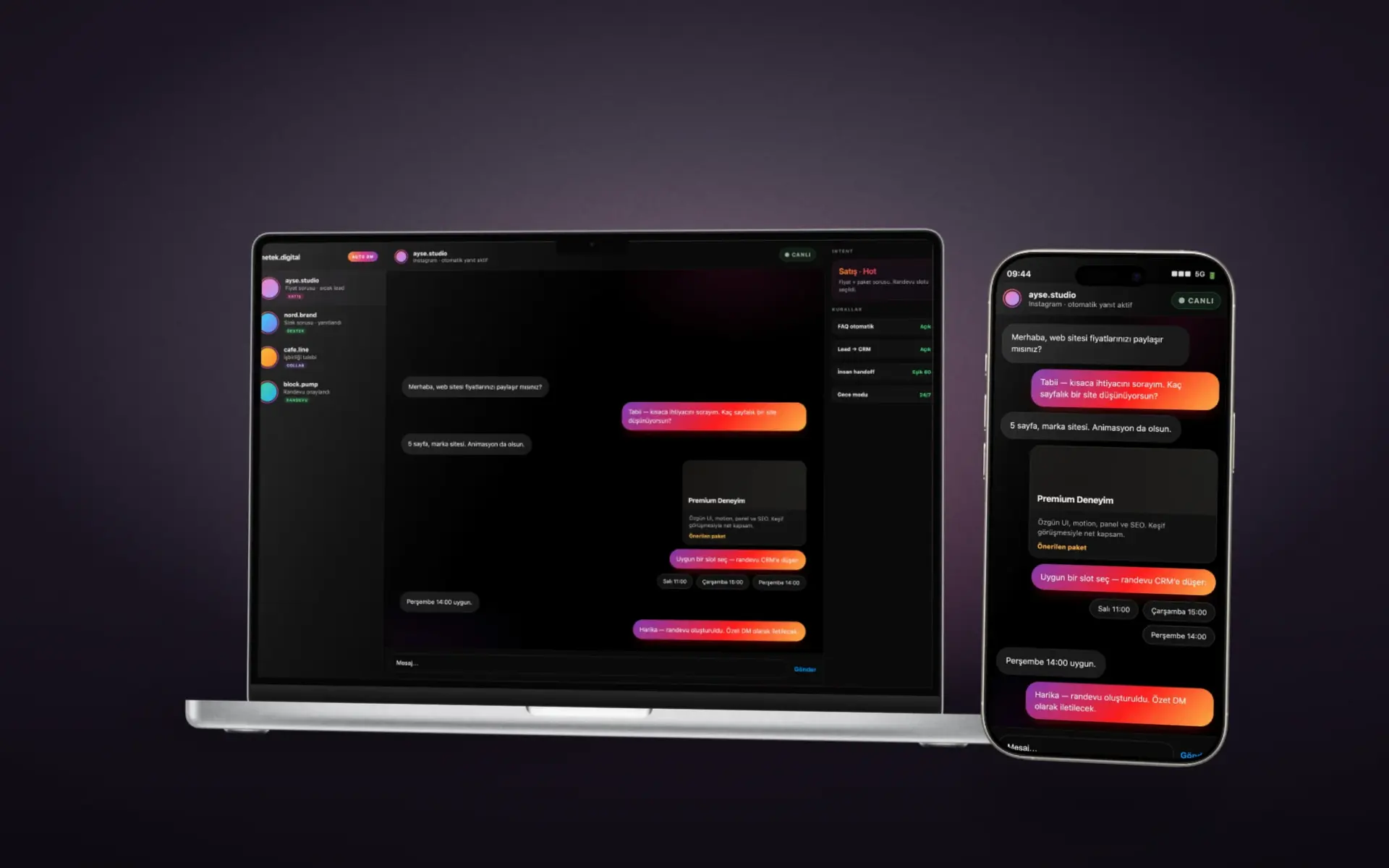
We implement the approved interface and connect the required panels, CRM functions, or messaging tools.
Quality review
We review mobile behavior, performance, core accessibility requirements, and technical SEO.
Launch
The approved release goes live with the agreed support period and content handoff.
Technology used in this work
- TypeScript and Node.js execution runtime
- Containerized sandbox isolation
- Playwright integration and browser regression suites
- Modern AST parsers and static analyzer tooling
- WhatsApp Cloud API
- n8n
- Python
- PostgreSQL
- Instagram Graph API
- Supabase
Questions we are asked
What is the difference between a chatbot and an AI agent?
A chatbot answers. An agent answers and acts: it can look up a record, book a slot, update a CRM entry or open a ticket, within rules you set. Most of the engineering sits in those actions and their limits, not in the conversation.
Which model do you use?
The one that fits the task, the budget and your data rules. We build the agent so the model can change later without rebuilding the workflow around it.
Can the agent work inside our existing tools?
Yes, when those tools expose an API or another reliable integration point. Help desks, calendars, CRMs, spreadsheets, WhatsApp Business and internal databases are the common ones.
How do you stop it from taking a wrong action?
By limiting what it can do, grounding it in your records, testing on real cases and keeping a person in front of anything costly or irreversible. No vendor can promise zero errors. We design so errors are caught before they matter.
What decides the cost?
The number of systems the agent touches, the risk of its actions, how many past cases we need to assemble for testing and whether a person reviews every output at first. We quote after a short discovery, not from a one-line request.
Can we start with a single workflow?
That is how we recommend starting. One workflow with a clear owner gives you a real result, a log to learn from and a base to extend.
Name the job you want an agent to take over.
Describe one workflow your team repeats every day and the tools it touches. We will tell you whether an agent fits and what the first version should do.