Reply in seconds, hand off with context.
For businesses whose customers write first: an assistant answers the routine questions, books the appointment and passes the rest to a person with the history in view.
- 10
- Products built in-house
- 12
- Web projects in the portfolio
- 04
- Site languages: EN, TR, ES, DE
- UTC+3
- Overlaps US mornings and the full EU workday
For many service businesses the first contact is a direct message. A customer asks the price, the opening hours or whether Thursday afternoon is free. The reply that arrives within a minute usually wins the booking, and the reply that arrives tomorrow usually does not. An assistant can answer that first message at any hour, from facts you have confirmed, and leave everything unusual to your staff.
What messaging automation should and should not do
It should answer the five questions your front desk answers every day, check the calendar, book a slot and record who asked for what. It should not quote a price it was not given, promise a result or decide a complaint. Anything outside the confirmed facts goes to a person immediately, with the conversation attached.
From the first message to a booking
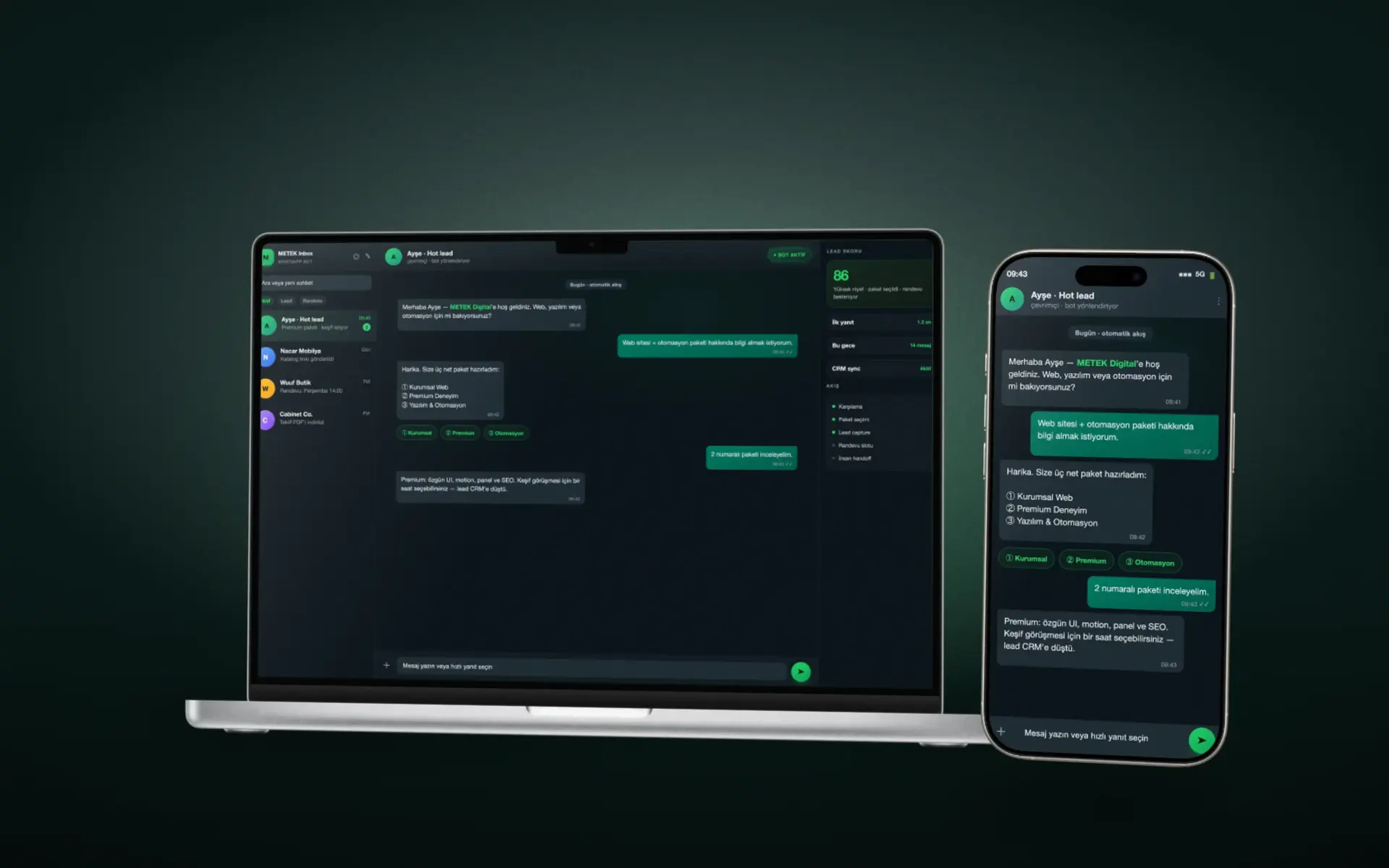
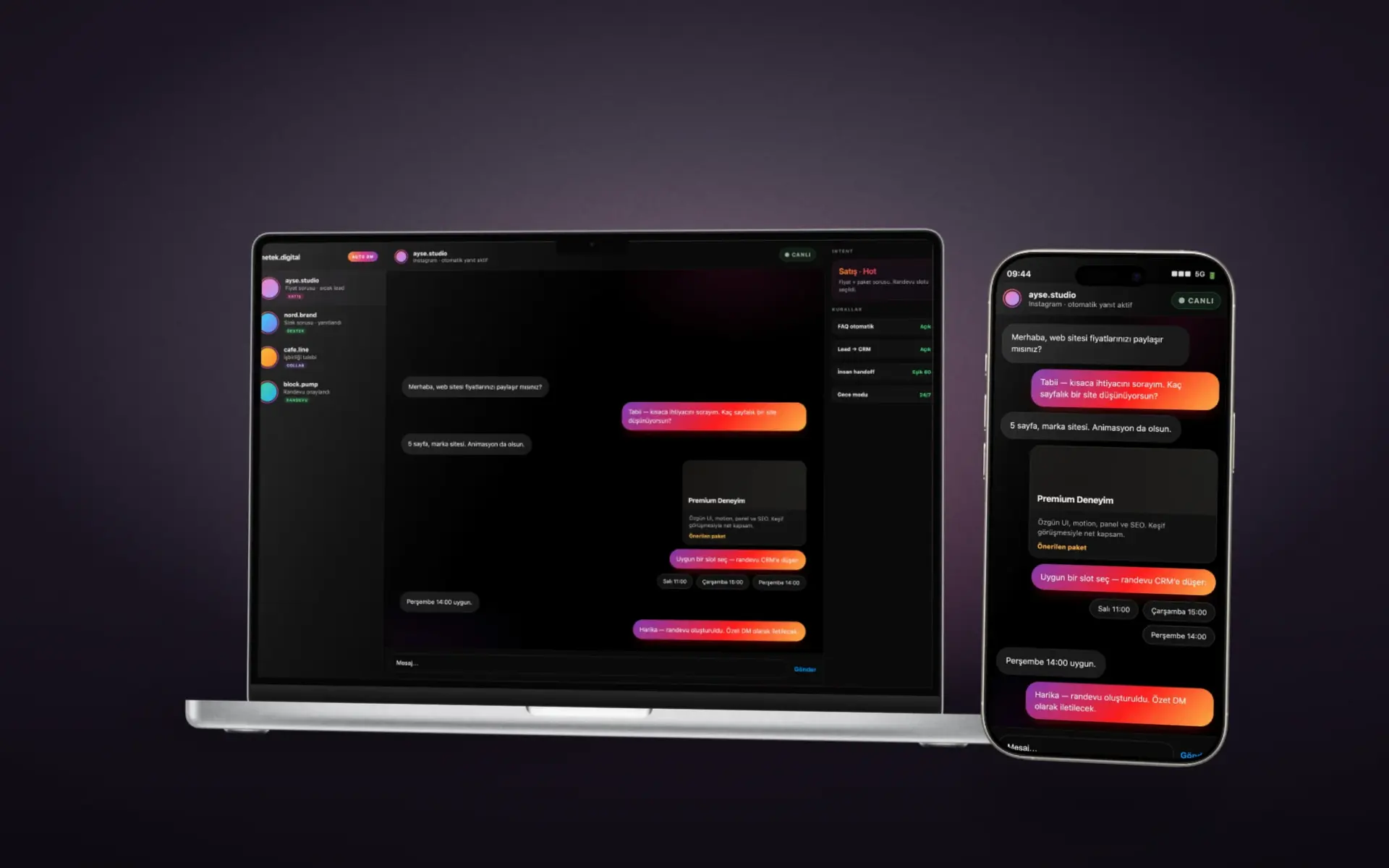
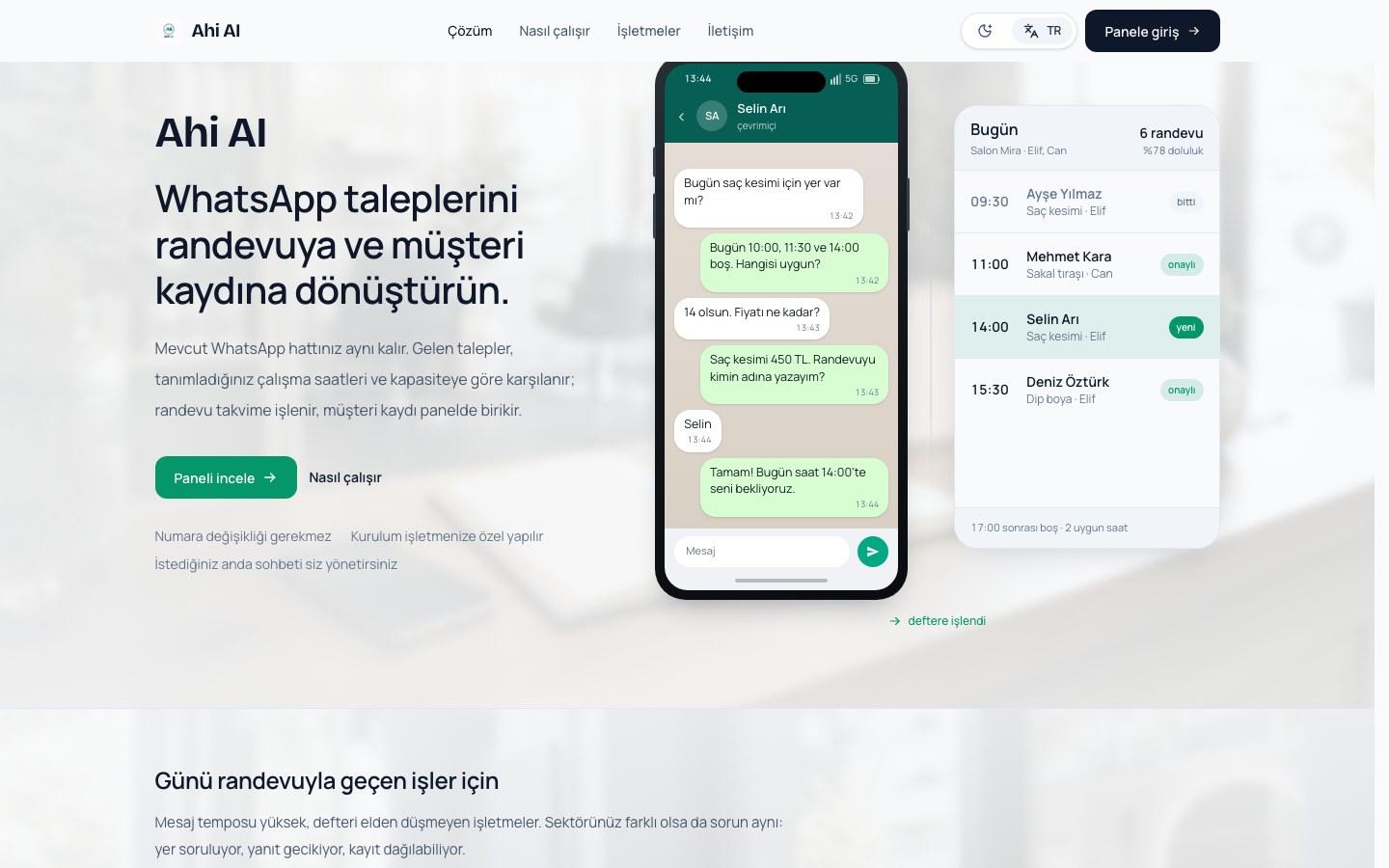
The customer writes. The assistant works out what they want, answers from the approved information, offers open slots from your calendar and confirms the booking. The booking, the customer's details and the full conversation are written to the shared panel, where staff can see them and add notes.
If the customer asks for something the assistant cannot do, it says so, collects the question and flags it for a human instead of improvising.
Platform rules that shape the design
Meta sets the rules for business messaging, and they change. On WhatsApp, a business can reply freely only for a limited period after the customer's last message and must use approved templates to start a conversation. Instagram has similar windows. Customers must have opted in to receive messages.
We design flows around those windows and check the current rules at build time. Opt-ins are recorded with the date and the wording shown, and every automated message carries a clear way out.
Handing over to a person
Staff can take over any conversation at any moment and the assistant steps back. Outside office hours, the assistant collects the details and queues the conversation for the morning. The person who picks it up sees the whole thread instead of asking the customer to repeat themselves.
What it costs to run
Three kinds of cost recur: the platform's per-conversation fees, hosting and, if an AI model is involved, the calls to it. We list them in the estimate with the assumptions behind each, so you can see how they grow with message volume.
Why teams work with us
Messaging that stays inside the facts.
We run one ourselves
Ahi AI is our own WhatsApp booking assistant with customer records and a daily appointment board. The same parts serve client projects.
Answers from confirmed data
The assistant speaks from services, prices and hours your business has approved, and passes everything else to a person.
One panel for every channel
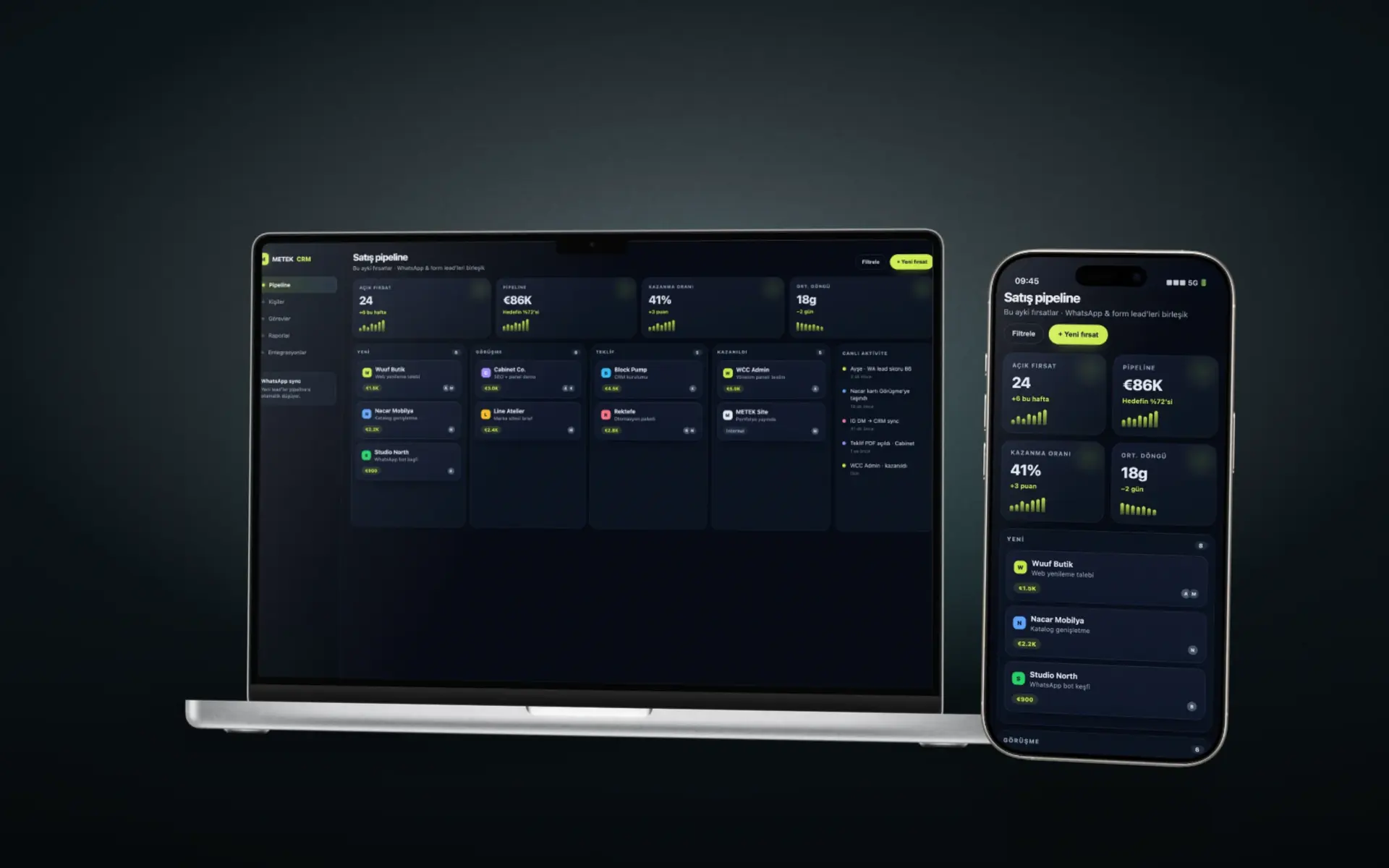
WhatsApp, Instagram and web enquiries land in a shared panel with customer history and team notes.
Scope
What a messaging project includes
Conversation design
The questions it answers, the data behind each answer and the hand-off rules.
Channel setup
WhatsApp Business and Instagram connections, with opt-in and templates.
Calendar and booking logic
Availability, durations, buffers and confirmations.
Shared panel
Conversations, customers and notes for the whole team.
Testing on real questions
Your inbox history, replayed before launch.
Handoff and documentation
How to change the facts, add a service and read the log.
Choosing a setup
Business-app replies, a chatbot platform or a custom assistant
| Setup | Good for | Limit | Notes |
|---|---|---|---|
| WhatsApp Business app with quick replies | A single person answering a modest number of messages | No booking logic, no shared history across a team | Use it until volume makes it painful. |
| Off-the-shelf chatbot platform | Standard flows and a team happy with the platform's limits | Your calendar, CRM and rules may not fit its model | A sound choice when the flow is simple. |
| Custom assistant with a shared panel | Your own booking rules, records and several channels | Needs a short build and someone who owns the confirmed facts | Where our work usually starts. |
How a project runs
From first conversation to launch
Discovery
We document the business goal, audience, available material, and technical constraints.
Scope
Pages, features, priorities, responsibilities, and review criteria are written down.
Design
We establish the interface, component rules, and a CSS design system when the project needs one.
Development
We implement the approved interface and connect the required panels, CRM functions, or messaging tools.
Quality review
We review mobile behavior, performance, core accessibility requirements, and technical SEO.
Launch
The approved release goes live with the agreed support period and content handoff.
Technology used in this work
- WhatsApp Cloud API
- n8n
- Python
- PostgreSQL
- Instagram Graph API
- Supabase
- Next.js
- TypeScript
Questions we are asked
Can staff take over a chat at any moment?
Yes. A person can step in at any point, and the assistant stops replying in that conversation until the person hands it back.
Does it work in several languages?
It replies in the language the customer writes in, using information you have confirmed in each language. We write the confirmed answers ourselves in English, Turkish, German and Spanish and use a native writer for other languages.
Will it invent prices or policies?
It answers only from the approved list and hands off the rest. We test it against the questions in your real inbox, and we fix every wrong answer before launch.
Can it also take enquiries from our website form?
Yes. Web enquiries go into the same panel as messages, so staff see one list whichever channel the customer used.
Is this allowed under WhatsApp's rules?
We build on the official business interfaces and follow the platform's windows, templates and opt-in rules, which we check again at build time because they change.
Send us your five most common questions.
List what customers ask most and where the answer lives today. That is enough for us to describe a first version of the assistant.